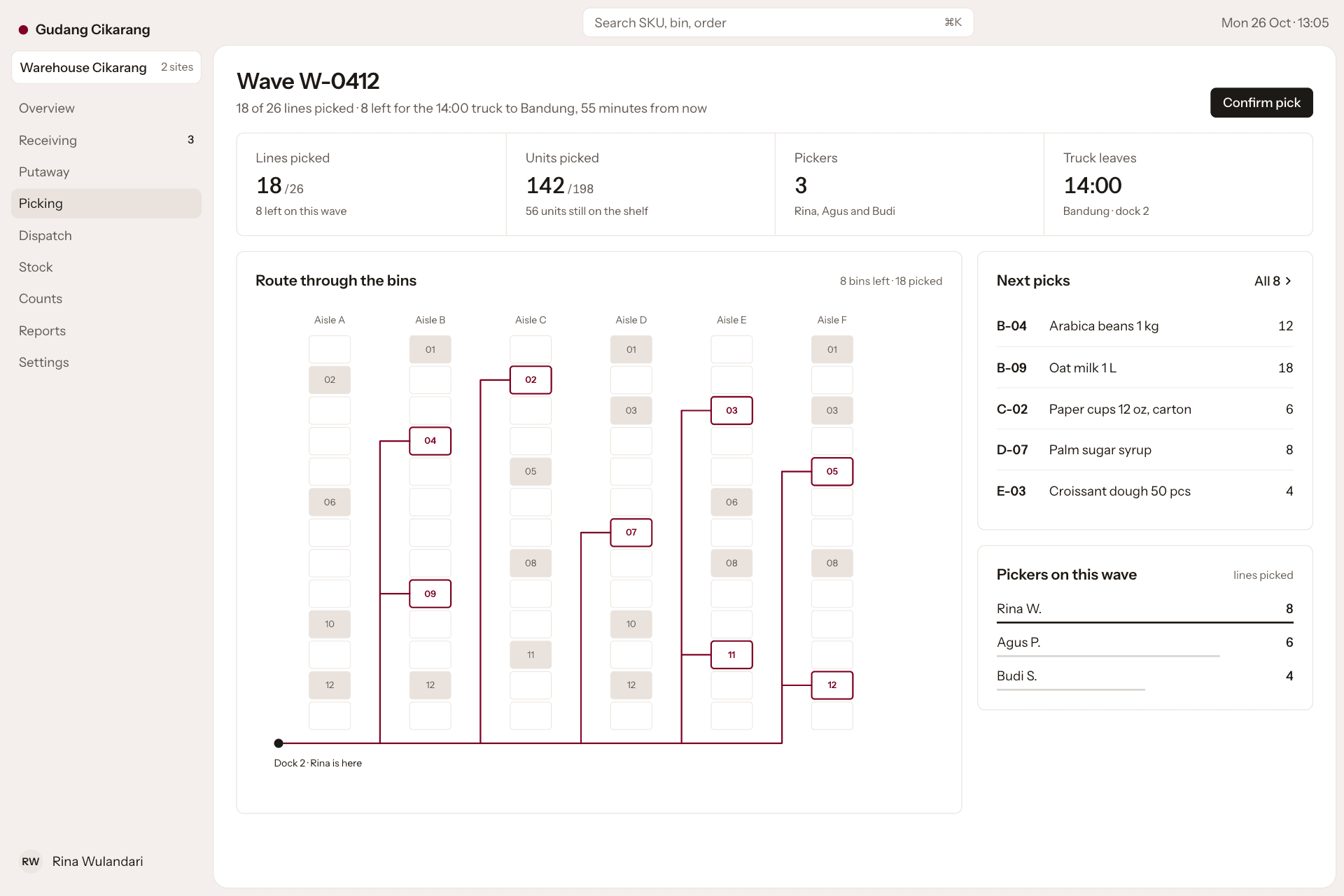
Built around your warehouse floor.
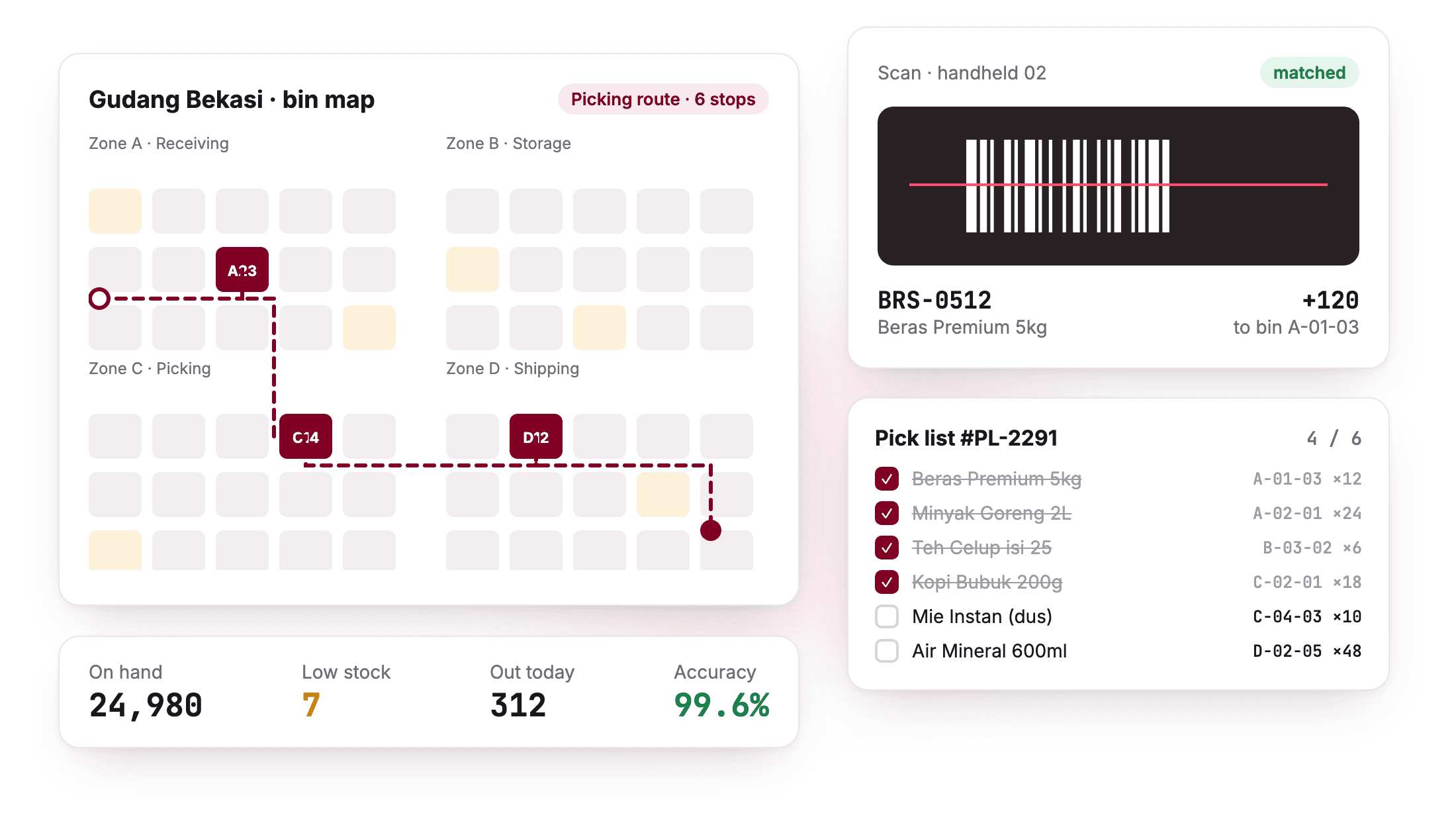
Receiving and putaway
Scan goods in against the purchase order and send each item to its bin.
Picking routes
Pick lists ordered by bin, so each picker walks one route per wave.
Barcode and QR scanning
Phones or handheld scanners confirm every move, so stock matches the shelf.
Live stock by location
Quantity per bin, warehouse and lot, updated with every scan.
Plan software around your business workflow
Map the first warehouse workflow
Map receiving → putaway → picking → dispatch → returns. Identify SKU and unit rules alongside lot tracking or expiry requirements before choosing features.
Compare custom and off-the-shelf systems
Consider an existing product when its configuration covers your standard workflows. Custom development becomes relevant when specific stock rules or integrations cannot be supported by the available configuration.
Agree on scope before estimating costs
Prepare warehouse and user counts with sample inventory data. Identify required ERP or marketplace APIs. Discuss migration deliverables alongside acceptance testing and post-launch support.
- Cost of Developing WMS Applications for SMEs in Indonesia: What You Need to Know
- Cost of Developing WMS Applications for Large Companies in Indonesia
- Migrating Inventory to a WMS: A Go-Live Checklist
- WMS Integration with ERP and Marketplaces: Scope the API
- Custom or Off-the-Shelf WMS? A Business Buying Guide
- How to Investigate Warehouse Stock Differences
- When Does a Business Need a WMS? A Readiness Checklist
- Excel vs WMS for Warehouse Management
- Simulated WMS Case Study: A Distributor Workflow
From first call to running system.
Agile sprints, regular check-ins, and code reviews and tests on every release.
- Discover how you workWeek 1
- Design clickable screensWeeks 1–3
- Build and testWeeks 3+
- Launch on your domain2–4 weeks to 6 months
- Support and improve3 months – lifetime
Questions, answered.
Can it connect to our ERP or marketplace?
Yes, when that system has an API. We agree which data moves, and in which direction, during discovery.
Does it work on phones and scanners?
Yes. Scanning screens are built for phones and handheld scanners, not only for desktops.
How long does a WMS project take?
Simple systems take a few weeks; complex ones 3–6 months. Your quotation sets a milestone for each phase.
How much does a WMS cost?
Projects start from Rp4M. A WMS is quoted after we map your workflow, users and integrations.
Other systems we build.
Each one built around the business it serves.
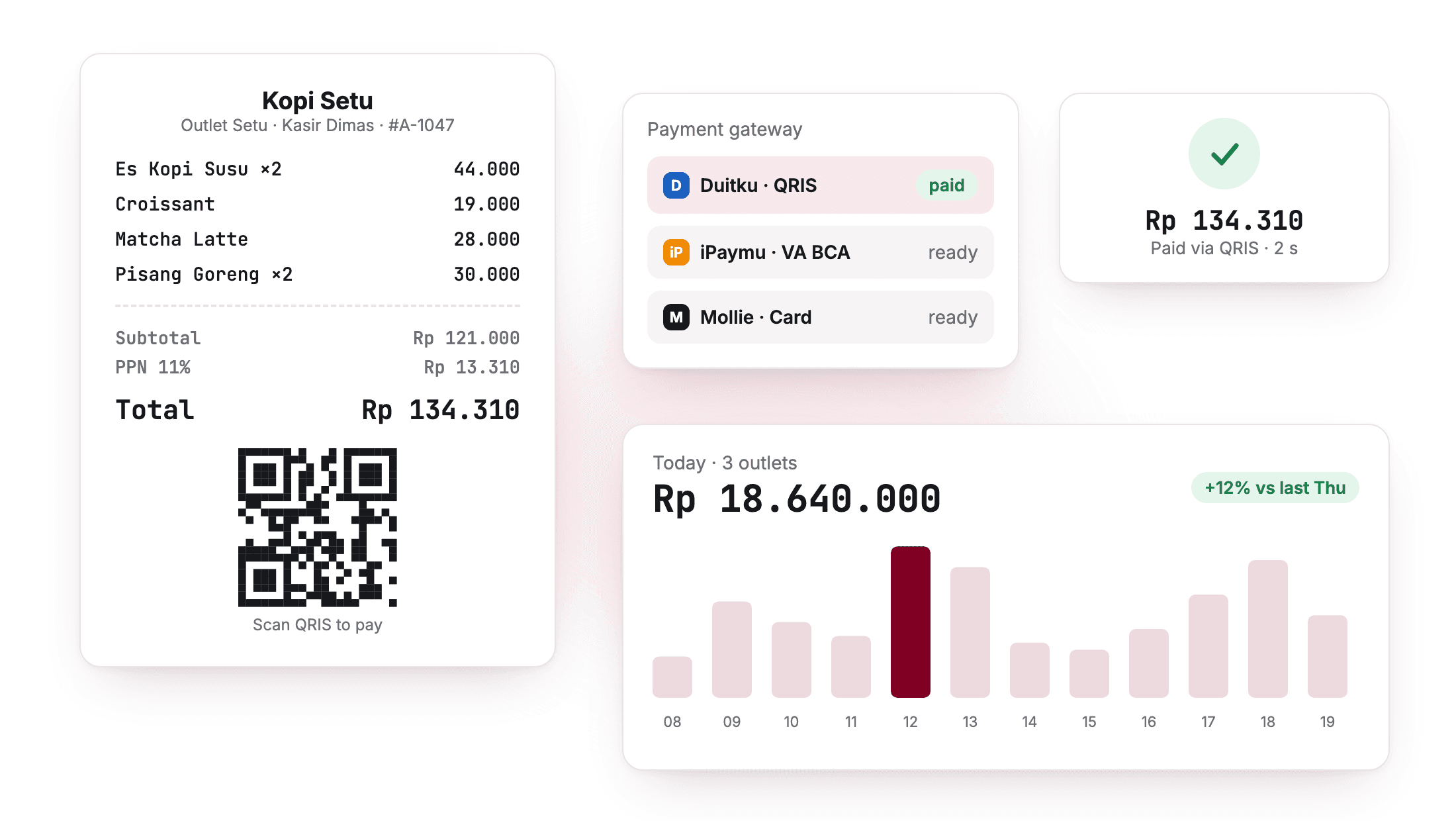
POS
Fast checkout across outlets, paid by QRIS, card or e-wallet through Duitku, iPaymu or Mollie.
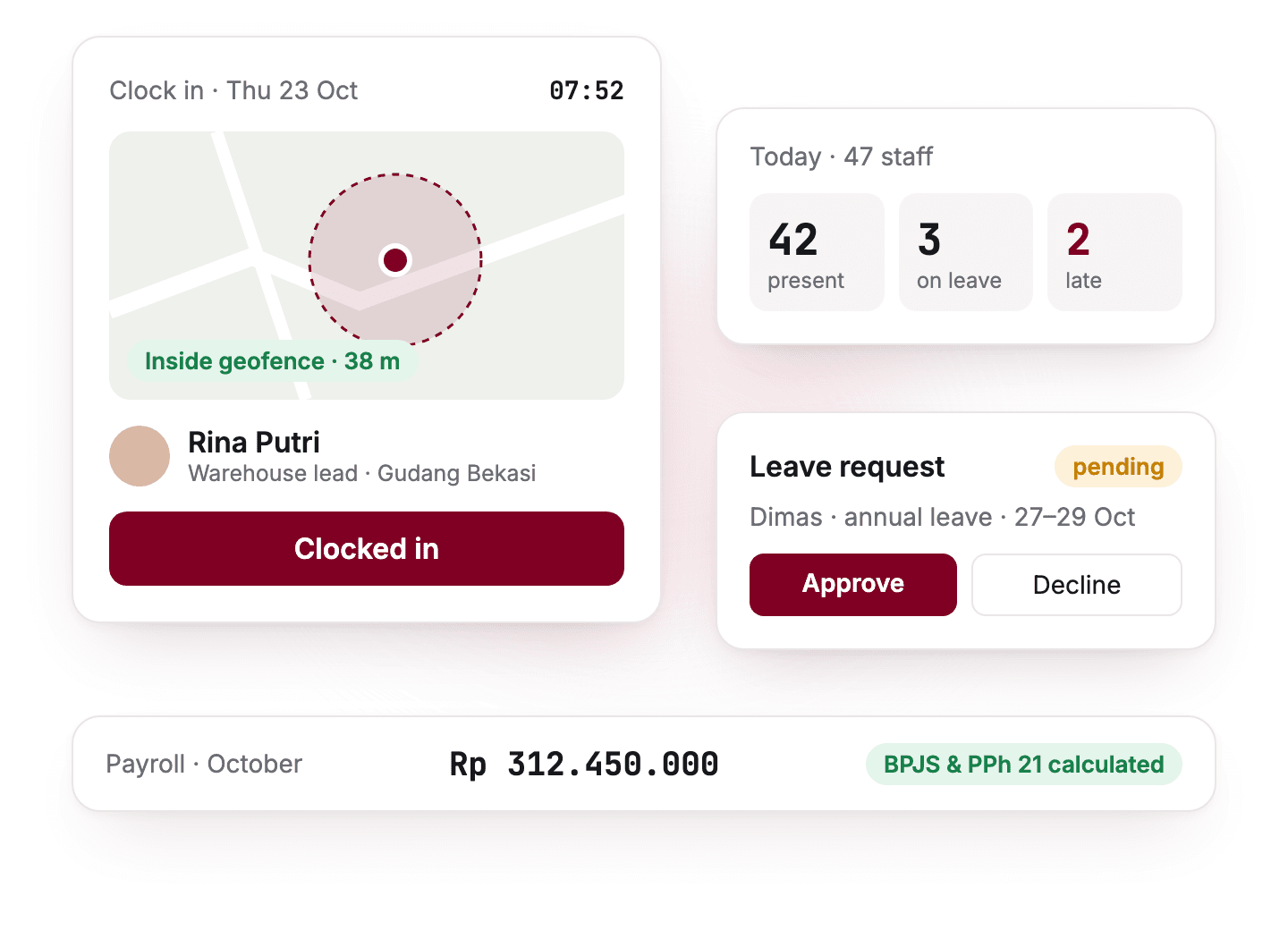
HRIS
Geo-tagged attendance, leave approvals and payroll in one place.
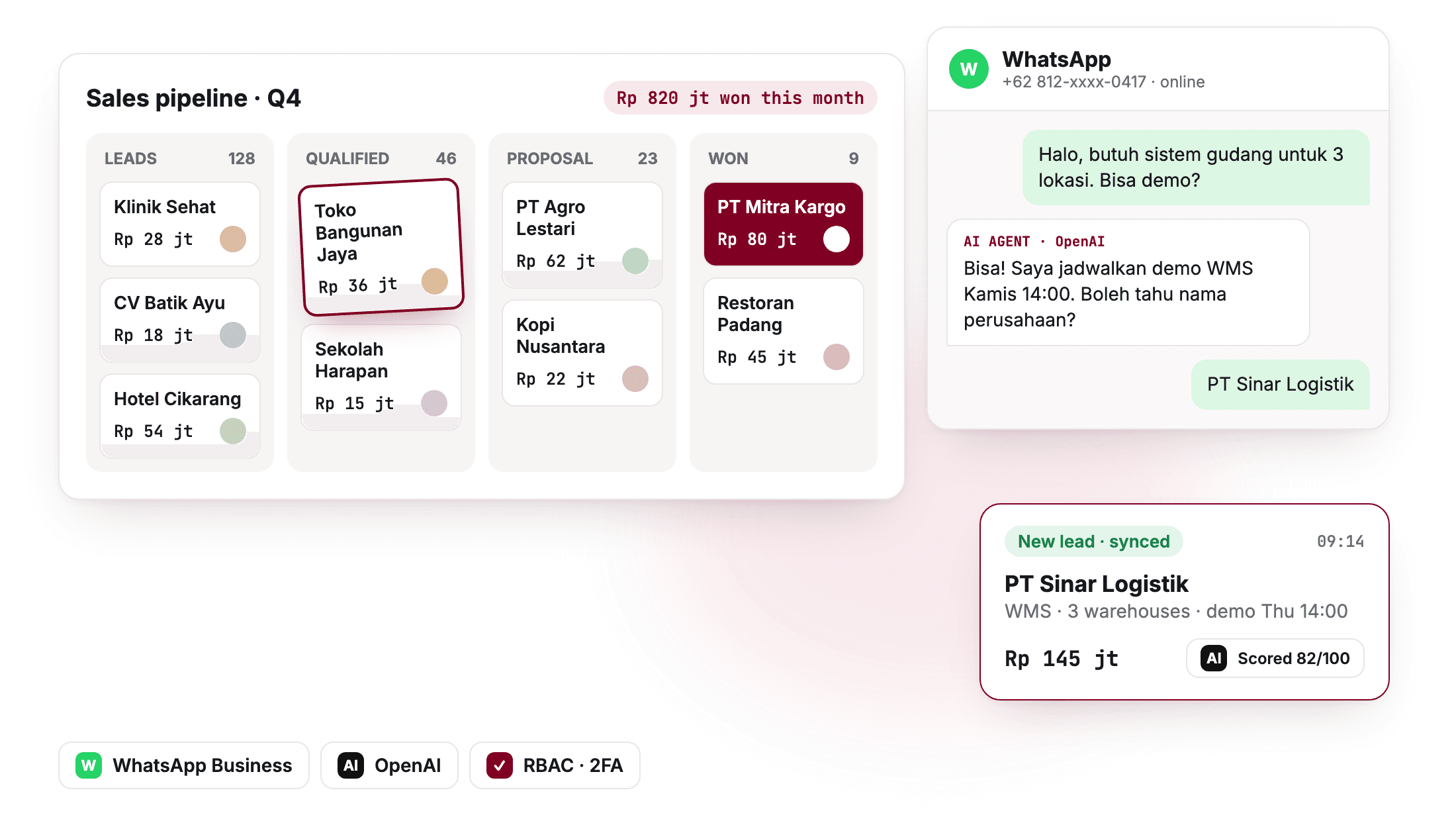
CRM
Leads from WhatsApp, answered by an OpenAI agent and moved through your pipeline.
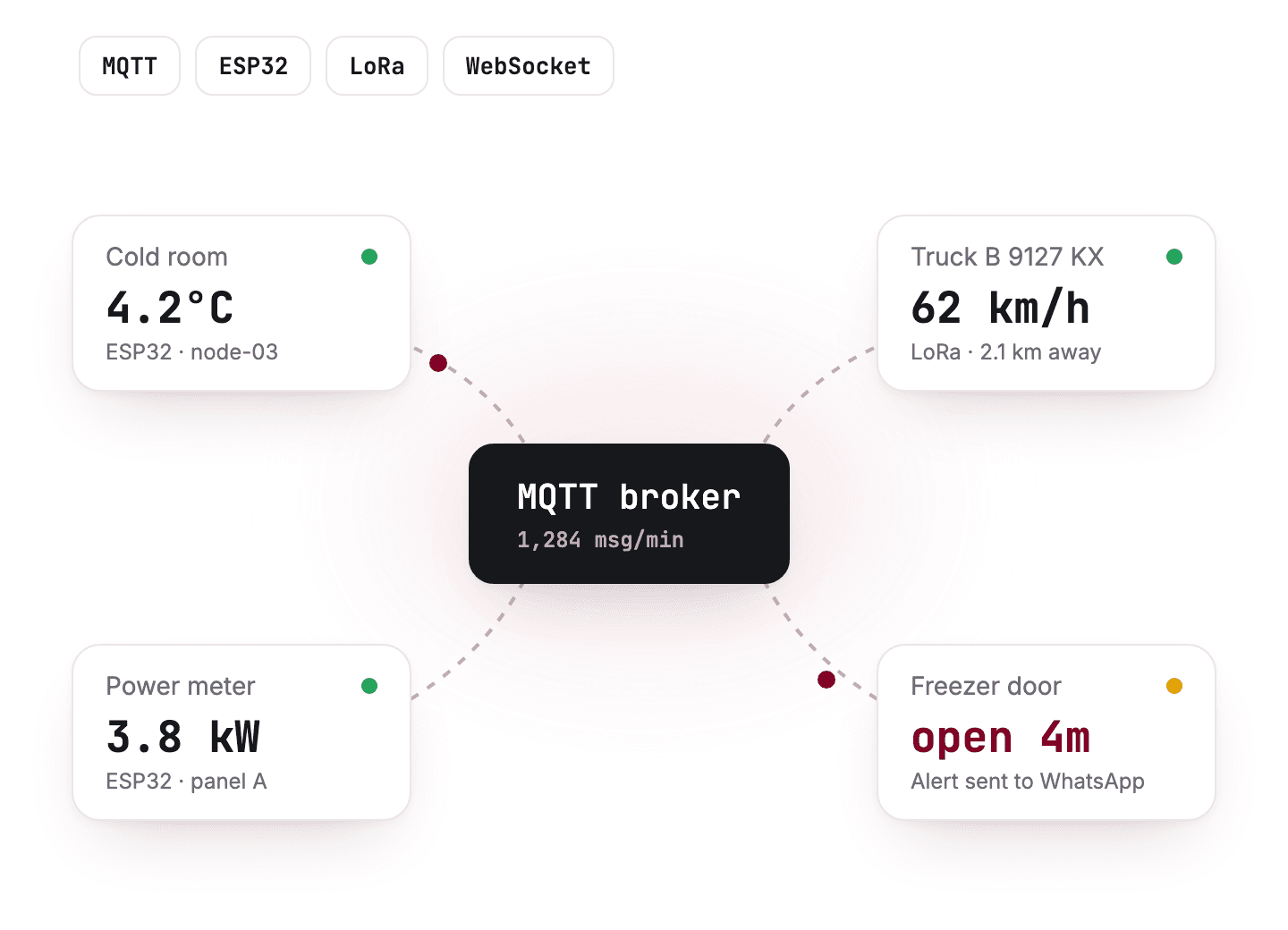
IoT
ESP32 and LoRa devices streaming live over MQTT, with alerts to WhatsApp.
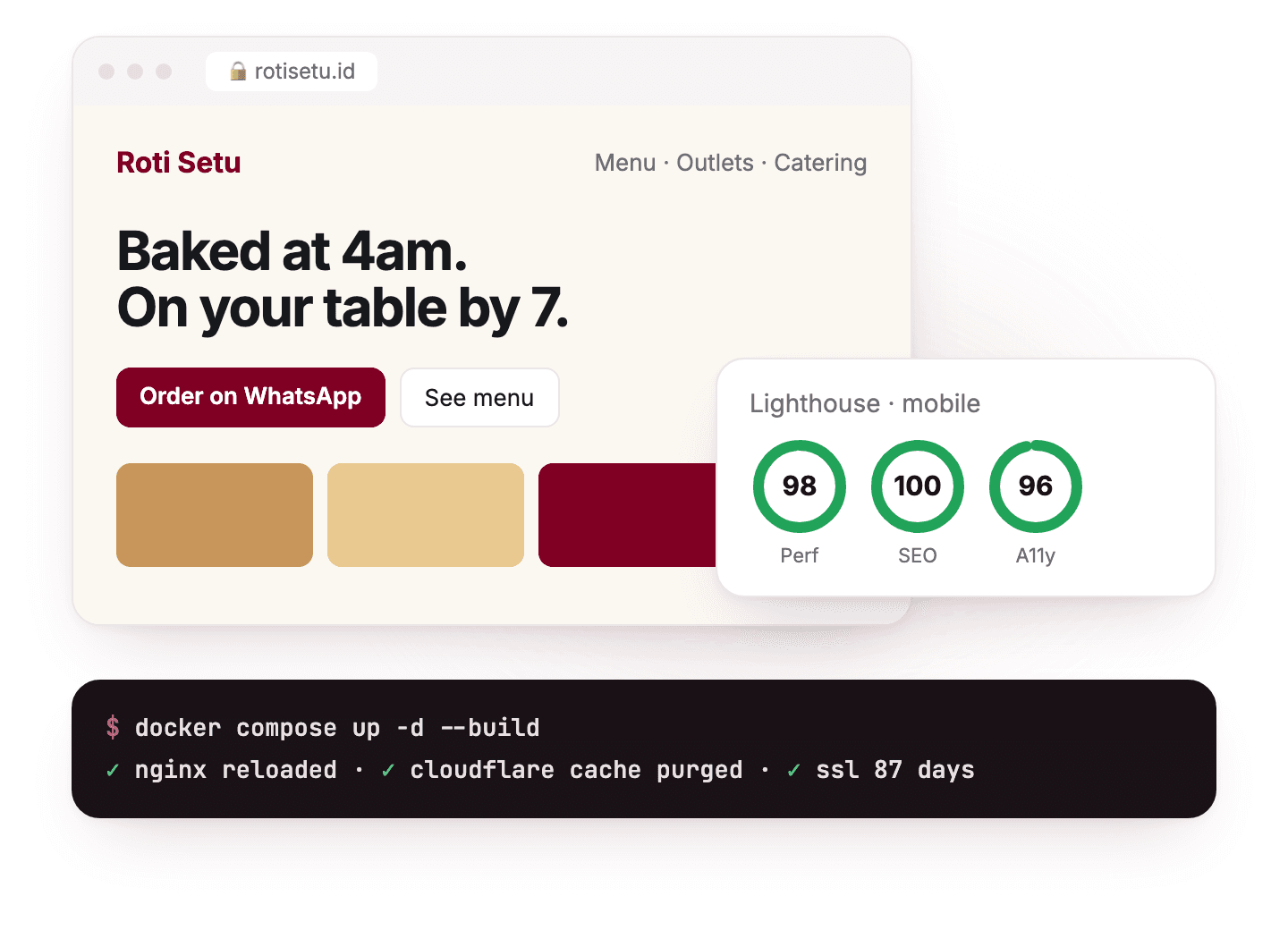
Website
Fast, SEO-ready company sites, deployed with Docker behind Cloudflare.
Let’s discuss your project.
Need a website, mobile app or business software? Share your goals and main features. We will follow up by email to discuss scope and a cost estimate.